

Research Activities
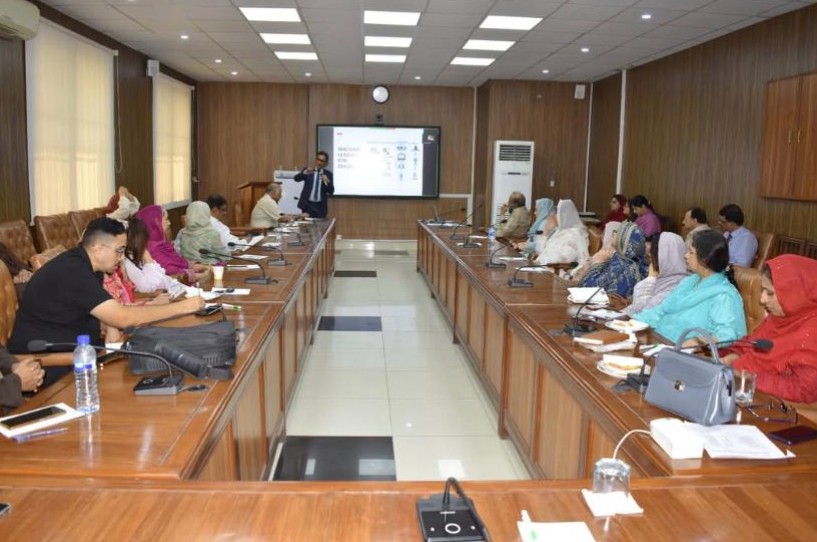
The Department of Biochemistry, University of Health Sciences (UHS) Lahore, under the auspices of the UHS Discipline Specific Faculty Council (DSFC), convened a scholarly seminar on “Emerging Biomarkers, Nutraceuticals, and Diagnostics in Neurodegenerative Disorders” on 12th September 2025. The gathering brought together eminent faculty and representatives from the Biochemistry Departments of all affiliated medical and dental colleges, creating a vibrant forum for intellectual exchange, graced by the patronage of Prof. Dr. Ahsan Waheed Rathore (Vice Chancellor) and Prof. Dr. Nadia Naseem (Pro-Vice Chancellor), the seminar was enriched by the erudition of distinguished facilitators—Prof. Dr. M. Zameer Ahmed, Prof. Dr. Hasan Raza, and Prof. Dr. Sadia Qureshi.
The deliberations illuminated cutting-edge themes: Neuro Signatures as novel biomarkers, nutraceutical interventions such as Omega-3 fatty acids, folic acid, and cyanocobalamin in Alzheimer’s prevention, and the promise of Artificial Intelligence and Machine Learning in forecasting early cognitive decline.
This academic endeavor underscored UHS’s enduring commitment to fostering innovation, collaborative research, and translational science in the service of improved neurological health.
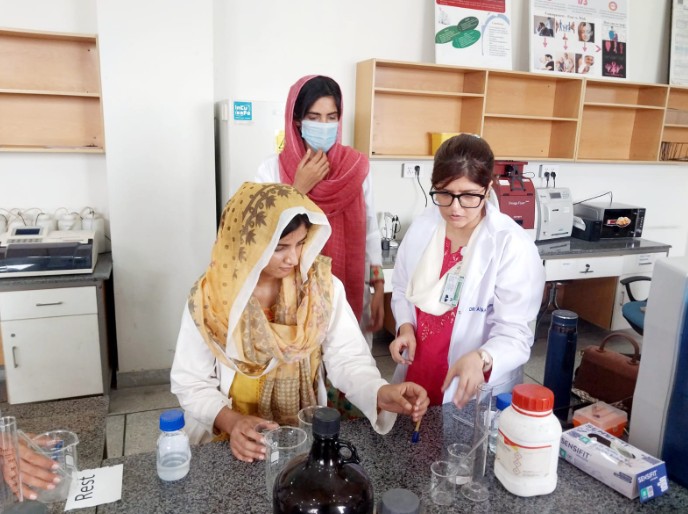
The Department of Biochemistry, University of Health Sciences Lahore, proudly organized MEDISUM – Summer School Program from June 24 to July 3, 2025, at Jinnah Campus, bringing together undergraduate students from various universities for an intellectually enriching experience. This immersive academic venture elegantly interwove didactic lectures, live demonstrations, and experiential hands-on training, offering participants a holistic journey into the fascinating world of biochemistry. Core areas such as centrifugation, Polymerase Chain Reaction (PCR), Enzyme Linked Immunosorbent Assay (ELISA), Spectrophotometry, Electrophoresis, and Chromatography were explored with scholarly depth, while students honed vital laboratory skills including micro-pipetting, solution preparation, and clinical assays for liver, renal, and cardiac function. Each day concluded with case-based scenarios and reflective assignments, nurturing critical analysis and a spirit of inquiry. Led by esteemed facilitators MEDISUM 2025 emerged as a vibrant confluence of knowledge, skill, and discovery, leaving participants profoundly enriched both academically and professionally.
The Department of Biochemistry, University of Health Sciences (UHS) Lahore, proudly conducted a Two-Day Hands-on Training Workshop on Basic Bioinformatics Tools (RNA-Seq Data Analyses) at its renowned City Campus on November 8, 2023. Conducted under the distinguished patronage of Vice Chancellor Prof. Dr. Ahsan Waheed Rathore, the workshop reflected UHS’s steadfast commitment to advancing the horizons of biomedical sciences.
The intellectually stimulating sessions were expertly facilitated by Dr. Naeem Mahmood Ashraf, Assistant Professor, School of Biochemistry and Biotechnology, University of the Punjab, Lahore, who illuminated the intricacies of modern bioinformatics. Participants delved into the sophisticated realms of GEO datasets, Linux commands, R environment, RNA-Seq pipelines, heat maps, volcano plots, and MA plots, gaining rare hands-on mastery over genomic data analyses.
This scholarly endeavor not only empowered young researchers and faculty with indispensable analytical acumen but also cultivated a spirit of academic synergy and collaborative inquiry. The workshop, with its vibrant exchange of ideas, reflected UHS’s resolute commitment to fostering innovation, nurturing research excellence, and equipping the next generation of scientists to navigate the rapidly evolving landscape of genomic medicine and bioinformatics.

Courses Offered
- Master of Philosophy (M.Phil.) Biochemistry
- Doctor of Philosophy (PhD.) Biochemistry
Course Title: Master of Philosophy (M.Phil.) in Biochemistry
Program Rationale:
Mission:
To provide a comprehensive and advanced education in biochemistry that emphasizes critical thinking, research skills, and practical application. We aim to prepare students for successful careers in academia, industry, and beyond by fostering a deep understanding of biochemical principles, promoting innovative research, and encouraging interdisciplinary collaboration.
Vision:
To be a premier program in biochemistry, known for our commitment to academic excellence, cutting-edge research, and impactful contributions to science and society. We strive to empower our graduates to become leaders in their fields, capable of addressing global challenges in health, environment, and biotechnology through their expertise and innovative solutions.
Course Objectives:
The objectives of M.Phil. program in Biochemistry are to provide students with a comprehensive understanding of human metabolic processes, hormones and their related disorders, acid-base imbalances in the body, and the significance of clinical enzymology. In addition, the program targets to impart advanced knowledge of xenobiotics, drug metabolism, and nutrition. This program also includes a course on biochemical techniques, which aims to provide students a sound understanding of important laboratory techniques used in research.
Program Learning Outcomes:
By studying these topics in depth, students will be able to develop a thorough understanding of the biochemical basis of human health and disease. This knowledge will be invaluable for those who want to pursue a career in research or academia, as well as those who want to work in the biotechnology, pharmaceutical, or healthcare industries.
SCHEME OF STUDIES (2-Year)
MPhil. Biochemistry
| Semester | Course Code | Course Title | Credit Hours (Theory) |
Credit Hours (Practical) |
Total Credit Hours |
|---|---|---|---|---|---|
| Semester 1 | |||||
| 1 | RM-701 | Biostatistics and Research Methodology | 02 | 0 | 2 |
| 1 | BCH-701 | Metabolic & Clinical Biochemistry | 02 | 01 | 3 |
| 1 | BCH-702 | Hormones in Health and Diseases | 02 | 0 | 2 |
| 1 | BCH-703 | Cell Communication and Intracellular Signaling | 01 | 0 | 1 |
| 1 | BCH-704 | Biochemical Regulation & Disorder of Acid-Base Balance | 02 | 0 | 2 |
| 1 | Elective | Elective Course | 02 | 0 | 2 |
| Semester 1 Total | 12 | ||||
| Semester 2 | |||||
| 2 | BCH-705 | Clinical Enzymology | 02 | 01 | 3 |
| 2 | BCH-706 | Molecular Cell Biology | 02 | 0 | 2 |
| 2 | BCH-707 | Advanced Diet and Nutrition | 01 | 0 | 1 |
| 2 | BCH-708 | Biochemical Techniques | 1.5 | 0.5 | 2 |
| 2 | Elective | Elective Course | 02 | 0 | 2 |
| Semester 2 Total | 10 | ||||
| Semester 3 & 4 | |||||
| 3 | - | Research (Thesis) | - | - | 6 |
| 4 | - | Professional & Teaching Skills Apprenticeship (PTSA) | - | 2 | 2 |
| Grand Total Credit Hours | 30 | ||||
Total Credit Hours: 30
Course Title: Doctor of Philosophy (PhD) in Biochemistry
Mission Statement:
To advance scientific understanding in the field of biochemistry through rigorous research, innovative methodologies, and interdisciplinary collaboration. We are committed to fostering a supportive and inclusive academic environment that nurtures the intellectual and professional growth of our students, equipping them to address complex biological challenges and contribute to the advancement of science and society.Vision Statement:
To be a leading global center for biochemistry research and education, recognized for our groundbreaking discoveries, excellence in teaching, and dedication to solving pressing health and environmental issues. We aspire to cultivate a community of scholars who push the boundaries of knowledge and drive progress in the biochemical sciences, ultimately improving human health and well-being. Program Educational.Objectives:
The objective of the Ph.D. course in Biochemistry is to provide in-depth knowledge and understanding of various aspects of metabolism of biomolecules and related disorders. The course covers topics such as disorders of neurotransmitters, clinical endocrinology, reproductive biochemistry, cancer, AIDS, and obesity. Through this course, students will gain a comprehensive understanding of these areas and their implications in the field of biochemistry.Program Learning Outcomes:
By the end of the PhD course students will be able to understand the fundamental principles of biochemical pathways involved in the metabolism of biomolecules, analyze the molecular mechanisms underlying the pathogenesis of disorders related to neurotransmitters, clinical endocrinology, reproductive biochemistry, cancer, AIDS, and obesity, evaluate the current research trends in the field of biochemistry and their implications in the diagnosis, treatment and prevention of metabolic disorders and develop critical thinking and problem-solving skills through experimental design, data analysis and interpretation.
PhD Biochemistry - Scheme of Studies (3-Year)
SCHEME OF STUDIES (3-Year)
PhD. Biochemistry
SCHEME OF STUDIES (3-Year)
PhD. Biochemistry
| Semester | Course Code | Course Title | Credit Hours (Theory) |
Credit Hours (Practical) |
Total Credit Hours |
|---|---|---|---|---|---|
| Semester 1 | |||||
| 1 | BCH-804 … | Research Methodology | 02 | 0 | 02 |
| 1 | BCH-804 | Advance Biostatistics | 02 | 0 | 02 |
| 1 | BCH-804 | Metabolism of Biomolecules and Related Disorders | 03 | 0 | 03 |
| 1 | BCH-805 | Biochemistry and Related Disorders of Neurotransmitters | 02 | 0 | 02 |
| Semester 1 Total | 09 | ||||
| Semester 2 | |||||
| 2 | BCH-806 | Advanced Laboratory Techniques | 02 | 0 | 02 |
| 2 | BCH-807 | Clinical Endocrinology | 03 | 0 | 03 |
| 2 | BCH-808 | Biochemical Aspects of Reproductive System Diseases | 02 | 0 | 02 |
| 2 | BCH-809 | Contemporary Biochemistry | 02 | 0 | 02 |
| Semester 2 Total | 09 | ||||
| Semester 3 onwards | |||||
| 3–6 | — | Research (Thesis) | — | — | 30 |
| Grand Total Credit Hours | 48 | ||||
Total Credit Hours: 48

